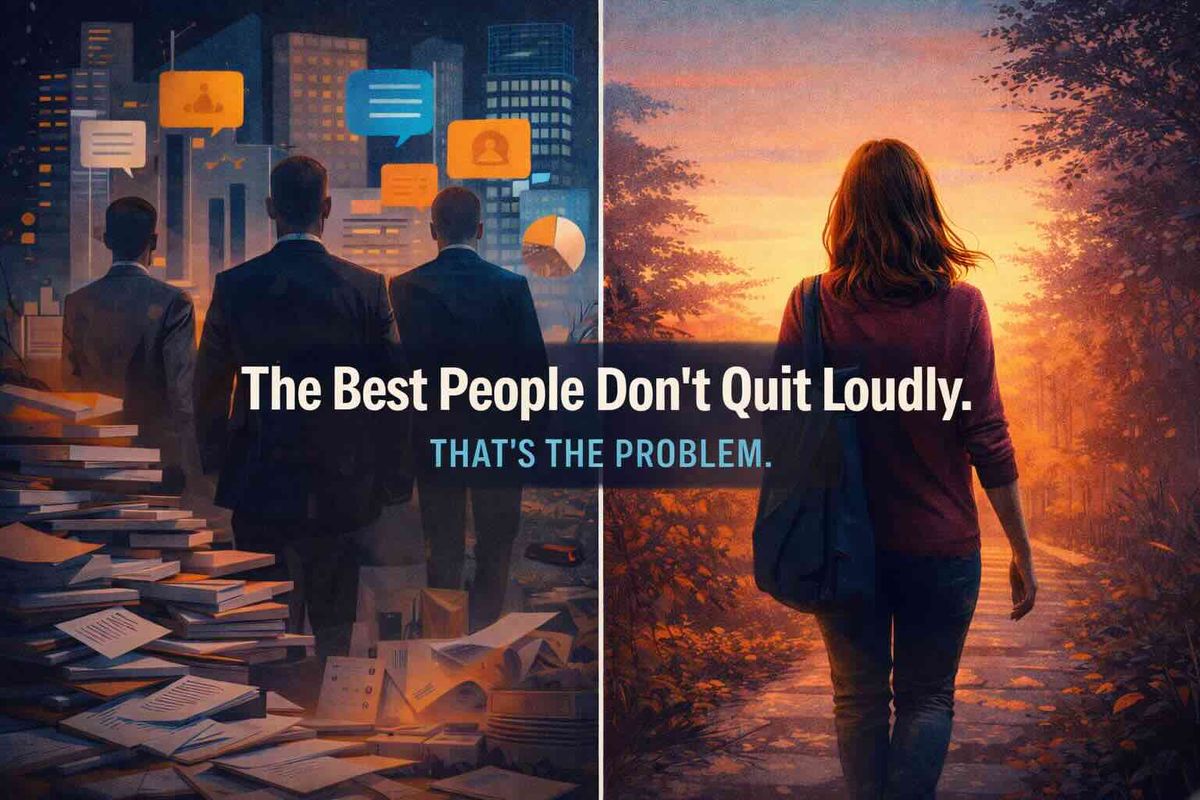
The Best People Don't Quit Loudly. That's the Problem.

Something has been showing up in my LinkedIn feed lately that I can't stop thinking about.
Senior people. Directors, VPs, CTOs, COOs, Co-founders. Executives who built and scaled world-class teams. Stepping away from those roles to go back to smaller companies, sometimes even building things directly. Not retiring. Not taking a break. Choosing to be closer to the work again in a smaller company.
I think something bigger is happening in the wider tech industry. And I think I know why.
I've spent a lot of my career in scaling companies. Keeping good people is something I've always taken seriously, and for the most part I've managed to do it. But I've still watched it happen around me.... the slow, quiet exit of the people who built the thing.
Great operators, the people who built the thing find themselves slowly becoming ineffective and frustrated as the company introduced the structure it needed to grow. And then they leave. Not because they couldn't scale. Not because they stopped caring. But because the environment no longer supports the way they were wired.
The person who builds the thing is often the first one the company loses when it starts to scale. The structure that's pushing them out grew up around them while they were heads down, building the thing.
The people who built the thing. Who drove the outcomes in the early chaos. Who figured it out when there was no clear path. They don't get fired. They leave. And they're usually the last person a growing company can afford or expects to lose.
The shift nobody prepares for
I've watched this play out more than once. A company starts to scale. Process comes in. Roles get defined. Decisions that used to take a day now take a week. And the person who's been closest to the work, closest to the customer, starts to feel it first.
The pace slows. Execution requires more coordination, more alignment, more sign-off. Work that once moved in a straight line from idea to outcome now weaves through layers of bureaucracy.
For someone wired to move fast and solve problems directly, that shift is deeply uncomfortable. But here's the important distinction: this isn't someone who can't scale. It's someone reacting to an environment that no longer supports the way of working that drove their success.
Jeff Smith, one of the more experienced operators I've worked with, put it plainly in Episode 1 of Mistakes Were Made: "You like to be the smart hero that's running around and there's not a lot of boundaries and you can flip from this to that. And now we're asking you to focus and stick with one sales rep and this set of accounts and you don't like it. And this isn't the play for you." He then added something I found really honest: "I also know I can't go to the manage by spreadsheet stage of a company. I've got to go back and build something."
That's not a character flaw. That's self-awareness. And it's exactly what leaders need to recognise in others, and help individuals voice the cause of their disengagement or frustration before it becomes an exit conversation. If you don't recognise it early, you'll misread their frustration as resistance, miss the signal they're sending, and eventually lose them.
When the signal gets ignored
Early-stage operators are usually closest to the truth. They're the ones who feel it when execution slows, when the customer experience starts to suffer, when effort starts moving away from outcomes and toward managing the process itself.
When those people start saying things are harder than they should be, that's not noise. That's a sign something is off.
Not all process is good process. Introducing rigour as a company scales is necessary, but only if it actually helps people do better work. When new structure makes it harder for your best people to execute, you haven't added value. You've added drag.
The goal isn't to avoid structure. It's to introduce it in a way that doesn't erode the things that made the company good in the first place: efficiency, ownership, a bias to action, staying close to the customer. Those aren't early-stage traits you grow out of. They're advantages worth protecting.
They won't tell you they're leaving
Your best people rarely make a scene.
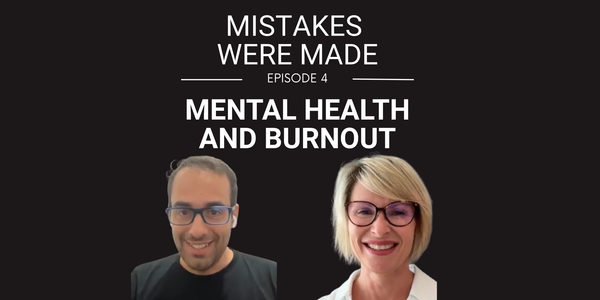
They don't escalate. They don't send the strongly worded email. More often, they get quieter. Michelle Stalimeros described it well in Episode 4: "You might notice that they're not participating as much in meetings, not as enthusiastic, not offering ideas, not being as innovative as usual when they usually are like that, but now they're not." By the time those signs show up clearly, the person has usually already made up their mind.
The work becomes more frustrating. They start spending more energy managing process than doing the job they're good at. Their standards don't drop, but their ability to hit those standards within the new system does. And eventually, they leave. Not because the company grew. Because they can no longer do the job in a way that feels effective.
By the time you notice, you're usually already too late.
How you keep them
The good news is this is a preventable problem, but it requires being deliberate.
- Give them context, not just process. People adapt to change when they understand why it's happening. If new structure is introduced without explanation, it feels arbitrary. Show people how the change connects to an outcome they care about.
- Audit your process for drag. Before your best operators vote with their feet, ask them directly: what's slowing you down? What's getting in the way of doing your best work? The answers will tell you whether your systems are scaling the business or constraining it.
- Find them the right place in the organisation. These are builders. They're drawn to new problems, undefined spaces, work that doesn't have a clear path yet. They're at their best when they're figuring something out. Trying to fit them into a highly structured, process-heavy role after they've operated with full autonomy is a fast way to lose them.
The most successful companies don't lose their startup people as they scale. They redirect them. Into new markets, new products, new problems that need someone who can operate without a playbook.
I've been reading a lot lately about Netflix's culture of freedom and responsibility, specifically the ideas Reed Hastings laid out in No Rules Rules. The short version: most companies add process to manage for the small percentage of people who might misuse freedom, and in doing so they frustrate and eventually lose the majority who don't need managing. Netflix's bet was the opposite. High talent density, genuine autonomy, and context instead of control.
It's a polarising model. Not everyone loves it, and I don't think every part of it translates neatly into every organisation. I had a conversation recently with a former colleague who comes from a pretty traditional, conservative work culture. I walked them through the Netflix approach and watched their face light up. They weren't surprised it existed. They were just surprised someone had actually built it.
That reaction stuck with me. Because it wasn't the reaction of someone who'd been spoiled by startup chaos. It was the reaction of a capable person who'd spent years being limited by the system around them.
Your builders feel that. Every day they can't move at the speed they know they're capable of their frustrations build and their effectiveness declines.
Give them things to build. Point them at the spaces where the business hasn't yet figured things out. That's not just how you keep them. That's how you use them properly.
Remember, if your builders aren't supported by the business, you can't scale effectively.