Navigating the Complexities of Burnout with Michelle Stalimeros.

Burnout is not a bad week. It’s not a tough quarter. It’s not something a long weekend magically fixes.
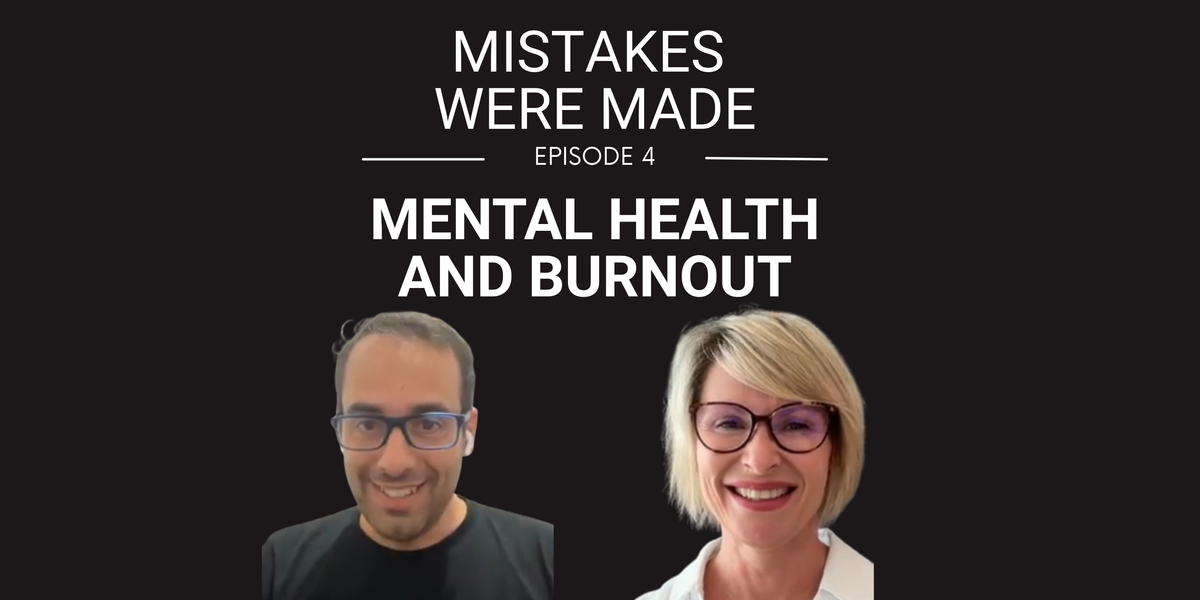
In this episode of Mistakes Were Made, Michelle Stalimeros joins me for an honest, grounded conversation about mental health, burnout, identity, leadership, and recovery. Michelle shares her personal experience of long-term burnout after a high-pressure corporate career, what it actually looked like, how it was diagnosed, and what helped her rebuild her life and boundaries on the other side.
This is a practical, human conversation for leaders and high performers who want to do meaningful work without burning themselves or their teams out.
Listen now on:
Key themes we explore
- Why burnout is fundamentally different from stress.
- How burnout accumulates quietly over months and years.
- The hidden cost of masking and “pushing through”.
- Physical, emotional, and behavioural signs leaders often miss.
- Why high performers are disproportionately at risk.
- The role leaders play, intentionally or not, in shaping mental health outcomes.
- What supportive leadership actually looks like in practice.
- The limits of “just use the EAP” as a response.
- Recovery, boundaries, and what growth looks like after burnout.
Favourite lines from Michelle
“Burnout is cumulative. It doesn’t happen after a few busy weeks, it happens after years of pushing.”
“Nobody comes to save you when you keep saying ‘I’m fine’.”
“It’s not weakness. It’s your system telling you something isn’t sustainable.”
“Leaders don’t need to be therapists, but they do need to care.”
“Burnout can be the thing that finally forces you to change patterns that were never serving you.”
Who this episode is for
- Leaders who genuinely care about their people but aren’t sure how to support mental health well.
- High performers who feel constantly tired, flat, or disconnected from work they once loved.
- First-time leaders navigating the human side of leadership.
- Anyone who suspects they might be “pushing through” more than is healthy.
- People recovering from burnout and wondering what comes next.
If you’ve ever thought, “I just need to get through this next phase”, this conversation is for you.
Michelle’s work and where to find her
Michelle writes and creates content focused on burnout recovery, mental health, and building healthier relationships with work.
- Website: https://nostosnest.com/
- Burnout recovery guide: Real Life Reset – Burnout Recovery Guide https://nostosnest.com/product/real-life-reset-burnout-recovery-guide/
Michelle also shares content across multiple platforms under @nostosnest:
- Threads
- TikTok
- YouTube: https://www.youtube.com/@NostosNest
- LinkedIn: https://www.linkedin.com/in/michelle-stalimeros-3972794/
Episode Glossary
Burnout - A state of physical, emotional, and mental exhaustion caused by prolonged, unmanaged stress, often accompanied by cynicism, reduced performance, and loss of identity.
Chronic stress - Ongoing stress without adequate recovery, often normalised as “just part of the job.”
Masking - The act of hiding distress or struggle by presenting a composed, high-functioning exterior.
Mental Health First Aid - Training that helps people recognise signs of mental health issues and respond appropriately, without acting as a therapist.
Psychological safety - A workplace environment where people feel safe to speak up, ask for help, and admit mistakes without fear.
High performer risk - The tendency for conscientious, driven, meaning-oriented people to be more vulnerable to burnout.
GP (General Practitioner) - A primary care doctor who provides initial medical assessment, ongoing care, referrals, and mental health support, often the first professional to speak to when experiencing burnout, stress, or mental health concerns.
Mental health support and resources
If this episode brings up difficult feelings, support is available.
Australia
- Lifeline – 13 11 14
- Beyond Blue – 1300 22 4636
New Zealand
- 1737 – Call or text 1737
- Lifeline NZ – 0800 543 354
United States
- 988 Suicide & Crisis Lifeline – Call or text 988
United Kingdom
- Samaritans – 116 123
Singapore
- SOS Singapore – 1767
Japan
LifeLine Phone Counselling
03-5774-0992
03-4550-1146 (Tokyo)
If you are in immediate danger, please contact your local emergency services.